
What Most Agencies Get Wrong About Healthcare Digital Strategy
- Charles Adams
- Dec 30, 2025
- 6 min read

The Fundamental Misunderstanding of Digital Strategy in Healthcare
Most agencies believe digital strategy is a collection of tactics. They talk about SEO, paid search, social media, display ads, or content marketing as if simply running all of them at once somehow adds up to a strategy. In healthcare, this misunderstanding is costly. A true digital strategy is not a channel checklist. It is an operating system for growth that aligns technology, data, compliance, patient behavior, and revenue outcomes.
Healthcare organizations are fundamentally different from retail or e-commerce brands. The sales cycle is longer, trust is harder to earn, regulations shape messaging, and conversions rarely happen in a single click. Yet many agencies apply the same playbook they use for consumer brands and expect it to work in a highly regulated, emotionally driven, and clinically sensitive environment. When it doesn’t, they blame budgets, markets, or competition instead of recognizing the real issue: the digital strategy was never built for healthcare in the first place.
Confusing Activity with Strategy
One of the most common failures in healthcare digital strategy is confusing motion with progress. Agencies often report success through impressions, clicks, traffic growth, or engagement metrics that look impressive but have no meaningful connection to patient acquisition or revenue. This creates a dangerous illusion of performance.
Healthcare executives do not need more activity. They need outcomes. A digital strategy that does not clearly connect marketing activity to admissions, appointments, or qualified patient inquiries is not a strategy at all. It is a reporting exercise designed to justify spend rather than drive growth.
True digital strategy starts with the end in mind. It defines what a qualified patient looks like, how that patient moves through the system, where friction exists, and how technology can reduce cost per acquisition while maintaining quality. Anything that does not serve that outcome is noise.
Treating Healthcare Like Every Other Industry
Another major mistake agencies make is assuming healthcare marketing is just a more regulated version of traditional marketing. In reality, healthcare requires an entirely different strategic framework. Patients are not customers browsing for deals. They are individuals often in distress, seeking trust, clarity, and reassurance at vulnerable moments.
Digital strategy in healthcare must account for emotional readiness, clinical appropriateness, and timing. A person searching for treatment options is not always ready to convert immediately. Agencies that optimize exclusively for speed and volume often generate leads that look good on paper but never convert into real patients.
Effective healthcare digital strategy recognizes the difference between awareness, consideration, and readiness. It uses data to identify where a patient is in their journey and delivers the right message at the right time without violating ethical or regulatory boundaries.
Ignoring the Role of Data Integration
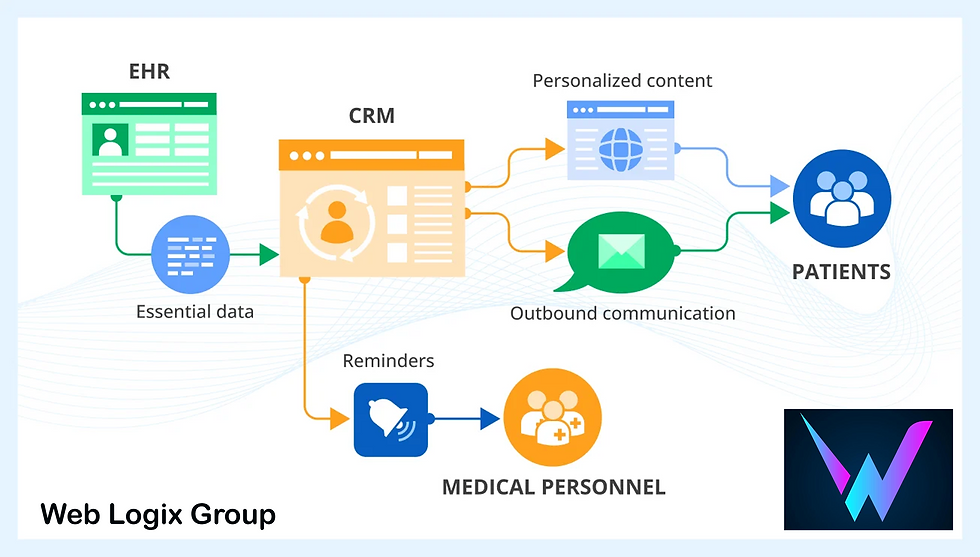
Most agencies operate in silos. SEO data lives in one platform, paid media data in another, CRM data somewhere else, and admissions or intake data often remains completely disconnected. When these systems do not communicate, strategy collapses into guesswork.
A strong digital strategy requires full visibility into the patient journey from first click to final outcome. Without CRM, EHR, or admissions integration, agencies cannot accurately measure what is working and what is failing. They optimize campaigns based on surface-level signals instead of real conversion data.
Healthcare organizations pay the price for this disconnect through inflated cost per acquisition, poor lead quality, and missed growth opportunities. Digital strategy must treat data integration as foundational infrastructure, not an optional enhancement.
Overvaluing Platforms and Undervaluing Systems
Many agencies sell platforms as solutions. They focus heavily on tools, dashboards, ad platforms, or automation software while ignoring the system that connects them. Platforms do not create strategy. Systems do.
Healthcare digital strategy should be designed as an interconnected ecosystem where each component feeds the next. SEO informs paid search. Paid search informs content strategy. Content informs retargeting. Retargeting informs conversion optimization. All of it flows into a unified data model that supports continuous improvement.
When agencies focus on isolated platforms instead of cohesive systems, optimization becomes fragmented. Improvements in one area often create inefficiencies in another, and leadership is left wondering why increased spend does not translate into proportional growth.
Failing to Align Marketing With Admissions and Operations
One of the most damaging mistakes agencies make is operating independently of admissions, intake, and operational teams. Marketing does not exist in a vacuum. In healthcare, it is inseparable from the systems that handle patient inquiries and deliver care.
A digital strategy that generates leads admissions teams cannot handle is a failure. A strategy that produces high call volume without quality filtering wastes resources and damages patient experience. Agencies often optimize for lead quantity without understanding operational capacity or intake workflows.
Effective healthcare digital strategy is built collaboratively. It accounts for staffing, call handling, scheduling, and clinical appropriateness. It ensures marketing supports operations rather than overwhelming them.
Misunderstanding Compliance as a Limitation Instead of a Design Constraint
Many agencies see healthcare compliance as a creative restriction that limits performance. This mindset leads to either overly cautious campaigns that fail to convert or risky strategies that expose organizations to legal and ethical issues.
Compliance should not be an afterthought. It should be a design constraint embedded into the digital strategy from the beginning. When done correctly, compliance-aware strategy builds trust and credibility while still driving performance.
Patients respond to clarity, transparency, and professionalism. A digital strategy that respects regulations while communicating value effectively often outperforms aggressive tactics that sacrifice trust for short-term gains.
Overlooking Long-Term Patient Value
Another common failure is focusing exclusively on immediate conversions without considering lifetime value. Healthcare relationships often extend beyond a single appointment or admission. Follow-up care, referrals, and ongoing services represent significant long-term value.
Agencies that optimize digital strategy solely for short-term acquisition miss opportunities to build sustainable growth. Retention, re-engagement, and reputation management should be core components of healthcare digital strategy, not secondary considerations.
A comprehensive digital strategy recognizes that the first conversion is just the beginning. It builds systems that support ongoing communication, education, and trust-building over time.
Treating Strategy as Static Instead of Adaptive
Healthcare markets change rapidly. Regulations evolve, competition increases, patient behavior shifts, and technology advances. Yet many agencies treat digital strategy as a static plan rather than a living system.
True digital strategy is adaptive. It uses real-time data to identify trends, test hypotheses, and adjust direction continuously. Agencies that rely on quarterly reports or rigid plans often fall behind before they realize there is a problem.
An adaptive digital strategy leverages analytics, automation, and human oversight to respond quickly without sacrificing quality or compliance.
Why Many Agencies Fail to Lower Cost Per Acquisition
Lowering cost per acquisition is often cited as a goal but rarely achieved sustainably. Agencies focus on surface-level optimizations such as bid adjustments or creative changes while ignoring structural inefficiencies in the funnel.
Cost per acquisition is not just a marketing metric. It is a reflection of the entire digital ecosystem. Poor landing experiences, disconnected data, weak intake processes, and misaligned messaging all drive costs higher.
A well-designed digital strategy addresses these issues holistically. It improves efficiency across the funnel rather than chasing incremental gains in isolated channels.
The Difference Between Vendors and Strategic Partners
At the core of these failures is a fundamental role confusion. Many agencies act as vendors executing tasks rather than partners shaping outcomes. They respond to requests instead of challenging assumptions and guiding decision-making.
Healthcare organizations need strategic partners who understand business objectives, regulatory realities, and operational constraints. A true digital strategy is built collaboratively and refined continuously, not delivered as a static service package.
Companies like Web Logix Group approach digital strategy as infrastructure rather than marketing noise, aligning technology, data, and execution around measurable growth.
What Effective Healthcare Digital Strategy Actually Looks Like
A successful digital strategy in healthcare starts with clarity. It defines goals in terms of patient outcomes and revenue, not clicks or impressions. It integrates systems so data flows seamlessly from first interaction to final conversion. It respects compliance while leveraging creativity and technology to build trust.
Most importantly, it is built for the reality of healthcare, not adapted from another industry. It evolves as markets change and uses data to guide every decision.
Healthcare organizations that demand this level of strategic rigor consistently outperform those that settle for activity-based marketing. The difference is not budget or scale. It is strategy.
The Cost of Getting Digital Strategy Wrong
When digital strategy fails in healthcare, the cost is not just financial. It affects patient experience, staff morale, and organizational credibility. Missed opportunities mean patients do not receive care when they need it, and resources are wasted chasing ineffective tactics.
Healthcare leaders should not accept generic solutions or surface-level reporting. Digital strategy should be treated as a core business system that supports growth, quality, and sustainability.
Moving Forward with the Right Strategic Mindset
The future of healthcare growth is digital, but only for organizations that approach it correctly. Agencies that continue to treat digital strategy as a collection of services will struggle to deliver meaningful results. Those that embrace integration, adaptability, and outcome-driven design will define the next generation of healthcare marketing.
Digital strategy is not about doing more. It is about doing what matters, with precision, accountability, and purpose. WWW.WebLogixGroup.COM


